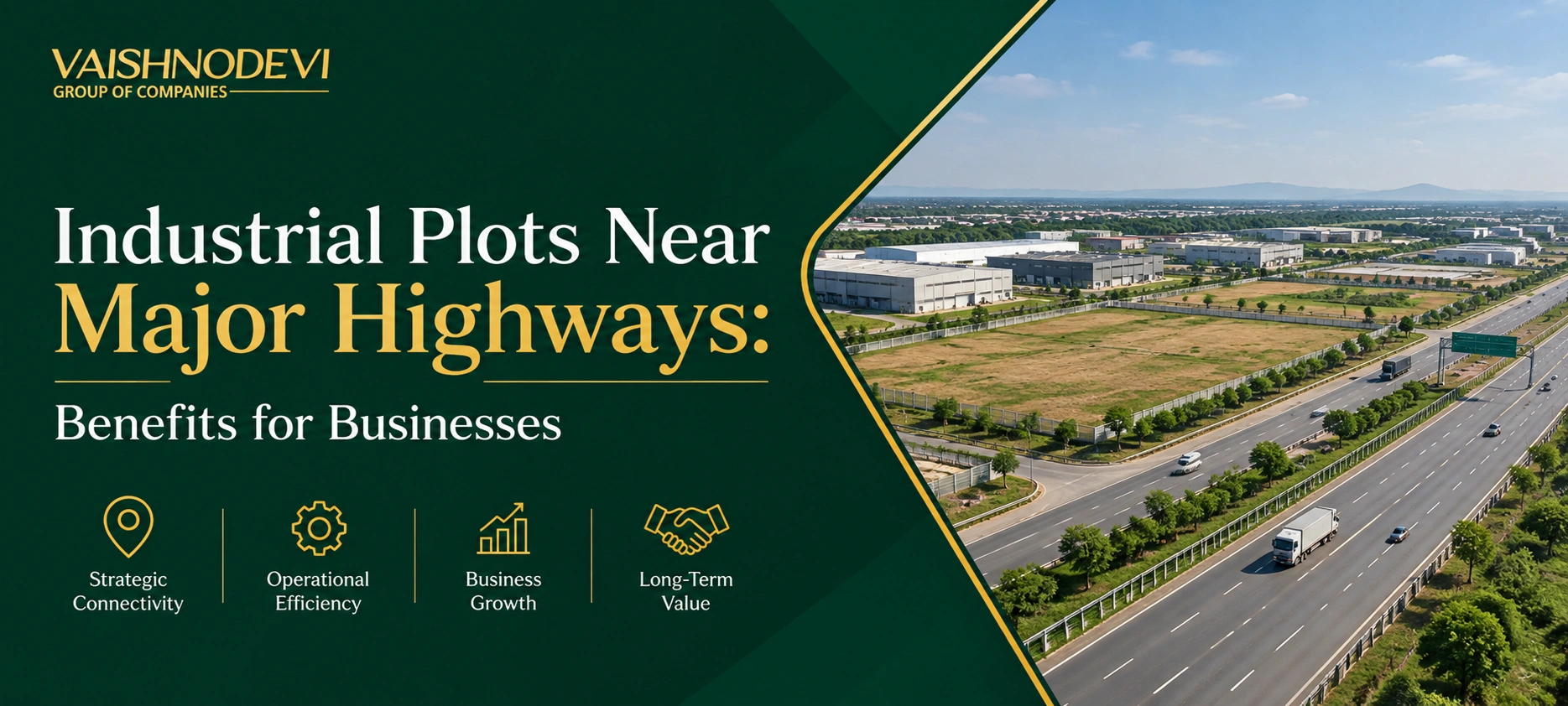
Industrial Plots Near Major Highways: Benefits for Businesses
For a manufacturing unit, warehouse, logistics company, or growing enterprise, the location of the property can directly affect day-to-day operations. Easy movement of raw materials, finished goods, employees and commercial vehicles can save both time and money. This is why businesses increasingly consider Industrial Plots located near major highways and well-connected industrial corridors.
A plot with good highway access can offer more than convenience. It can support smoother logistics, easier market access and better opportunities for future business expansion. However, businesses should evaluate connectivity along with infrastructure, approvals, plot size and the overall development of the area.
Why Highway Connectivity Matters for Industrial Businesses
Highways serve as the network of connections between industrial areas, cities, customers, suppliers, and other businesses, necessary for a firm’s operation. Therefore, access to these networks can significantly affect a business’s success.
Some of the key advantages include:
- Faster movement of raw materials and finished products
- Easier access for heavy commercial vehicles
- Better connectivity with nearby cities and markets
- Reduced travel time for suppliers and distributors
- Convenient access to logistics and transportation services
- Greater flexibility when planning delivery routes
When transportation is a major part of business operations, being close to a major road can make the property more practical in the long run.
1. Lower Transportation Difficulties
Businesses that move goods regularly need reliable road connectivity. A poorly connected industrial location can result in longer routes, additional fuel consumption and delays.
Industrial Plots near highways can help businesses:
- Plan shorter and more efficient routes
- Reduce unnecessary travel through congested city roads
- Improve delivery schedules
- Make supplier visits easier
- Handle larger commercial vehicles more conveniently
For manufacturing and logistics businesses in particular, these practical benefits can influence operating costs over time.
2. Better Access to Suppliers and Markets
An industrial property is not an isolated workplace. It forms part of a larger supply chain. Businesses need to receive materials, manufacture or store products and eventually move them to customers or distributors.
A highway-connected location can provide easier access to:
- Suppliers and vendors
- Distribution centres
- Wholesale markets
- Retail networks
- Nearby industrial clusters
- Major cities and commercial areas
This can be particularly useful for companies that serve customers across multiple locations.
3. Easier Business Expansion
Businesses often begin with one requirement and gradually expand their operations. A well-planned industrial location can make that growth easier.
Before purchasing Industrial Plots, businesses should consider:
- Whether the plot provides sufficient space for the planned facility
- Possibility of future expansion
- Availability of larger plots nearby
- Internal road access
- Parking and loading requirements
- Space required for machinery and storage
Choosing a location that supports future requirements can prevent the need to relocate when the business grows.
4. Infrastructure Is Just as Important as Location
Being close to a highway is useful, but highway connectivity alone does not make an industrial property suitable. Businesses should also check the infrastructure provided within the industrial development.
Important facilities include:
- Proper internal roads
- Reliable electricity connections
- Water supply
- Drainage and sewage systems
- Street lighting
- Security arrangements
- Adequate access for commercial vehicles
Planned industrial developments can make the process of setting up operations more convenient compared with isolated industrial land.
5. Potential for Long-Term Property Value
Location plays an important role when businesses evaluate an industrial property as a long-term asset. Areas with strong connectivity and growing industrial activity may attract continued demand from manufacturers, warehouses and other businesses.
However, buyers should not assume that every highway-adjacent property will automatically appreciate. It is important to examine:
- Existing industrial activity
- Infrastructure development
- Accessibility
- Local planning and approvals
- Surrounding business ecosystem
- Future development plans
A balanced assessment can help businesses choose a property based on actual usability rather than location alone.
Vaishnodevi Estates: Industrial Spaces Designed for Business Needs
Vaishnodevi Estates has developed multiple industrial projects across Kumbalgodu and Bidadi, two established industrial locations around Bengaluru. Its project portfolio includes completed and ongoing Industrial Plots in different sizes, giving businesses options based on their operational requirements.
For example, Industrial Park Phase 18 in Kumbalgodu offers 74 plots and two factories, with plot sizes ranging from 5,000 to 25,000 sq. ft. The company also has ongoing Industrial Park Phase 16, offering 49 plots between 3,000 and 15,000 sq. ft.
The focus extends beyond simply providing land. Previous Vaishnodevi industrial developments have included features such as internal roads, electricity, street lighting, sewage systems and gated community facilities. Phase 6, for instance, offers large industrial units ranging from 20,000 to 80,000 sq. ft. along with essential infrastructure for industrial operations.
What Businesses Should Check Before Buying?
Before finalising Industrial Plots near a major highway, it is sensible to review the property from both operational and financial perspectives.
Keep these points in mind:
- Verify ownership and required approvals
- Check the permitted industrial use of the property
- Assess the actual distance and access route to the highway
- Examine internal road width and vehicle movement
- Confirm electricity and water availability
- Check drainage and sewage infrastructure
- Consider present and future space requirements
- Study the surrounding industrial ecosystem
- Compare the total cost with the property's long-term usefulness
For companies that rely heavily on transportation and logistics, easy access to a primary arterial road will carry clear functional benefits. Improved road links could facilitate quicker movement of goods, access to markets and supplies, enhancing flexibility.
At the same time, location should be evaluated alongside infrastructure, approvals, plot size, and future requirements. Well-planned Industrial Plots can give businesses a stronger foundation for setting up operations and planning long-term growth.
With its range of industrial developments across Kumbalgodu and Bidadi, Vaishnodevi Estates provides businesses with multiple options to explore when looking for professionally planned industrial spaces around Bengaluru.
FAQs
Industrial Plots near highways can provide faster transportation, easier market access, shorter delivery routes, and convenient movement of commercial vehicles.
Businesses should check internal roads, electricity, water supply, drainage, sewage systems, street lighting, security, and commercial vehicle accessibility.
Yes. Good connectivity can make it easier to manage growing logistics needs, reach wider markets, accommodate suppliers, and expand business operations over time.
Businesses should verify ownership, approvals, permitted land use, highway access, plot size, infrastructure, utility availability, surrounding development, and future requirements.